
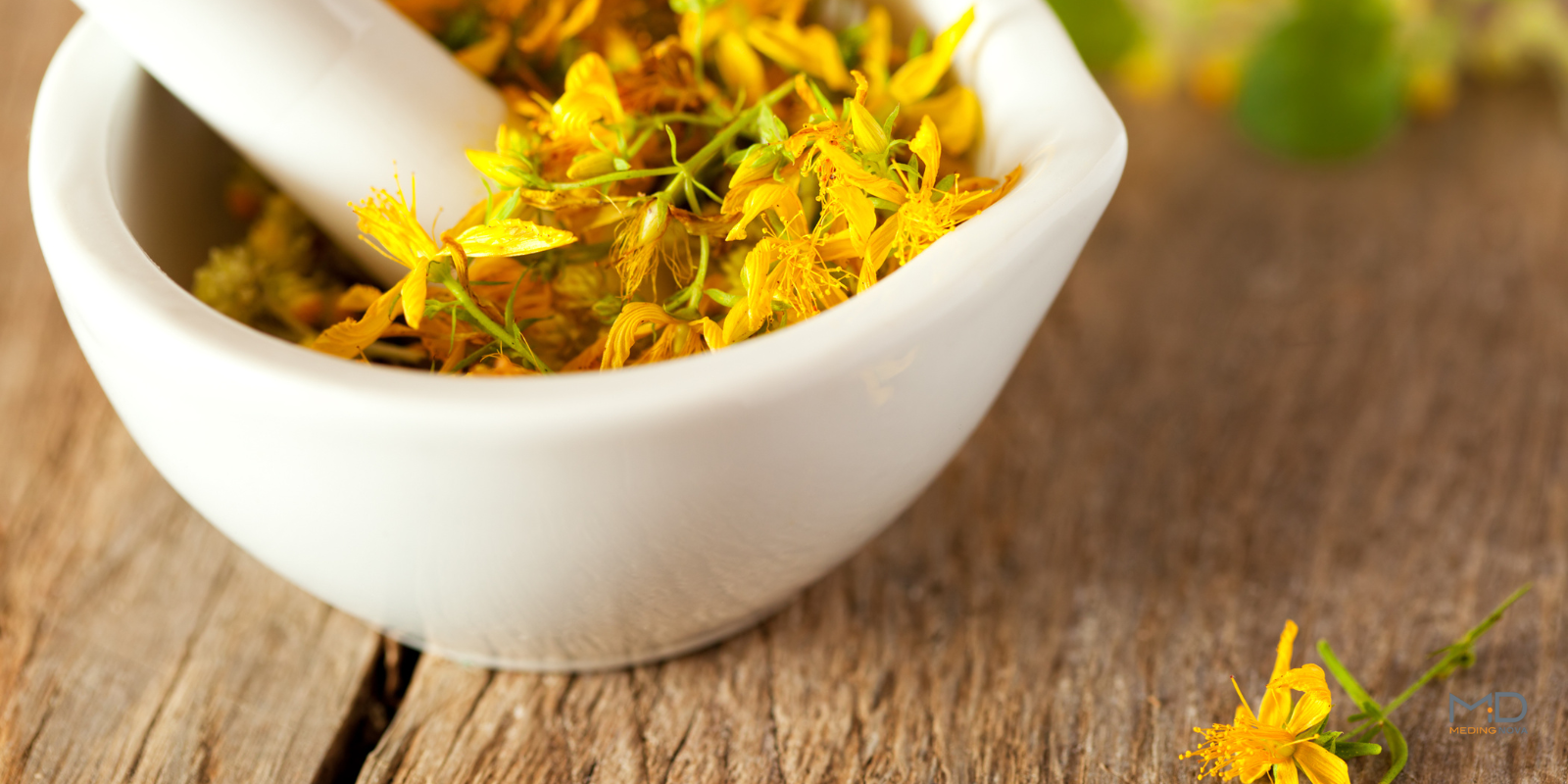
St. John’s Wort (Hypericum perforatum) — properties, uses & safety guidelines
What Is St. John’s Wort?
Goran, St. John’s wort, Our Lady’s herb — these are all names for St. John’s Wort (Hypericum perforatum), a perennial herbaceous plant that blooms from May to September. It grows on meadows, forest edges, and roadsides across Europe, Asia, North Africa, and North America.
Medicinal properties
The medicinal part of the plant is the aerial part (herb) — the flower with the leaf — harvested during full bloom.
Dried herb is used for preparing tea, while fresh flowers, which release a red pigment when crushed, are used to make oil extract.
Active compounds in St. John’s wort exhibit:
• Antiseptic effects
• Astringent effects
• Epithelium-restoring effects
• Antidepressant effects — the most significant
The antidepressant activity comes mainly from hyperforin, with contributions from quercetin, flavonoids, and, according to some studies, hypericin.
Who should NOT use St. John’s Wort?
Not recommended for:
• Pregnant women
• Nursing mothers
• Individuals under 18
• People with severe depression
• People with schizophrenia
• People with bipolar disorder
It should also be discontinued at least two weeks prior to surgery, due to interactions with anesthetics.
Medical uses of St. John’s Wort
1. Dry extract (tablets and capsules)
Recommended by WHO and EMA for:
• Treatment of mild depressive episodes
• Short-term use only
2. St. John’s Wort tea
Used for:
• Mild depression
• Insomnia
• Melancholy
• Menopausal symptoms
Due to its antiseptic effect, it can also be used for vaginal rinsing.
3. Oil extract (topical use)
Used for its antiseptic, anti-inflammatory, and epithelium-restoring properties.
Recommended for:
• Wound healing
• Burns
• Hemorrhoids
4. St. John’s Wort oil (internal use)
Has an antidepressant effect and may help with inflammatory conditions in the digestive system. It is produced through maceration and stored in dark glass bottles.
Side effects
Mild side effects
• Fatigue
• Dizziness
• Headache
• Dry mouth
• Gastrointestinal upset
Serious side effect — photosensitivity
Caused by hypericin. Symptoms include:
• Intense itching
• Swelling
• Burns
• Blisters
• In severe cases — permanent hyperpigmentation (occurs with doses 10–20× higher than therapeutic)
Precautions:
• Avoid UV exposure
• Use sunscreen
• Do not apply St. John’s Wort oil during sunbathing
Why is expert advice important?
Although St. John’s Wort supplements are available without a prescription, professional guidance is essential.
This plant has serious interactions with medications, possible contraindications, and potential side effects, making consultation with a pharmacist or physician crucial for safe use.
mr ph. Tamara Božilović