
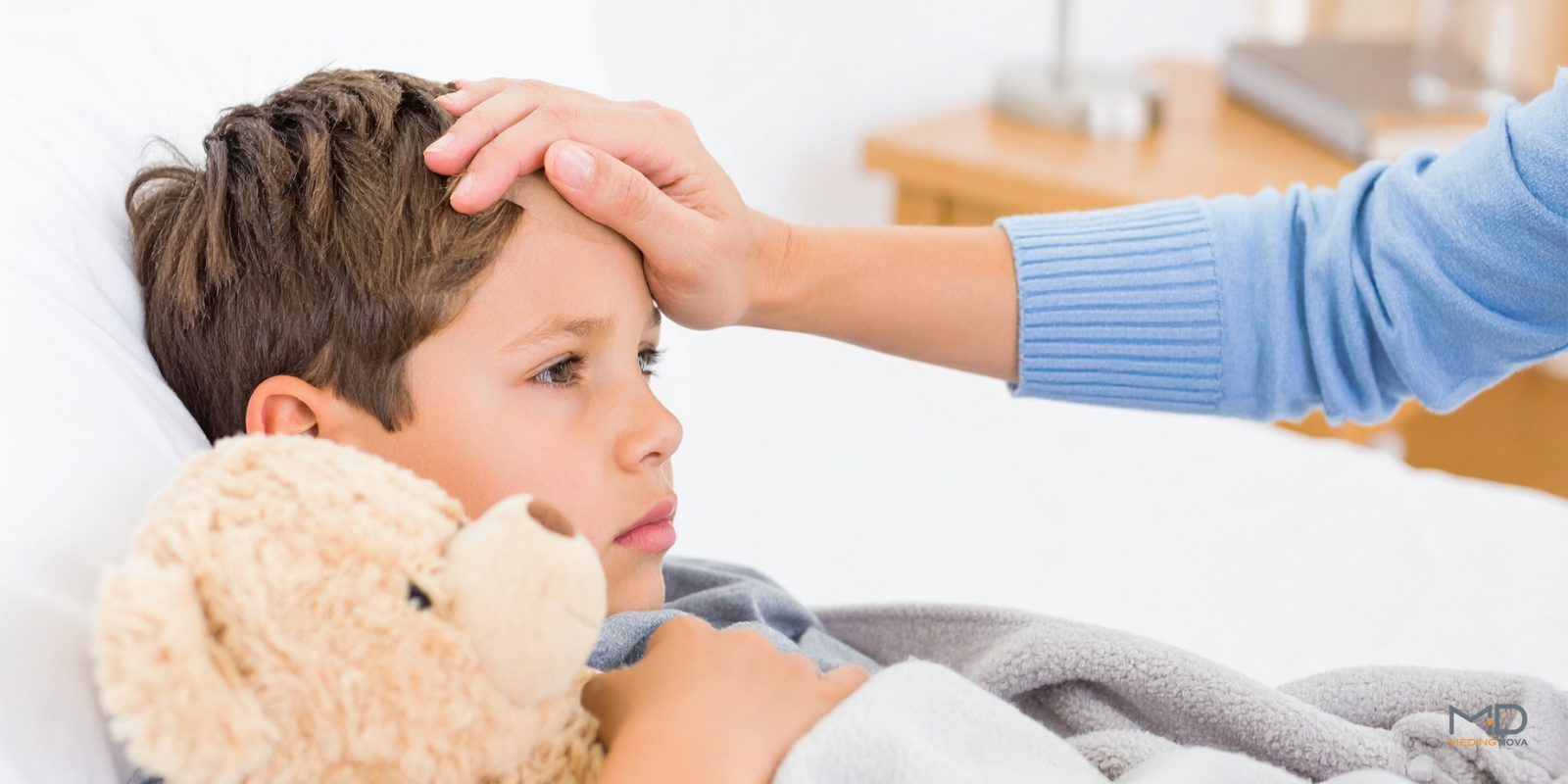
Fever in Children – What Parents Need to Know
Is fever a reason for concern?
Fever in children is most often not dangerous, but it is understandably alarming for parents.
Fever is a natural defense mechanism of the body in response to infection.
A child's temperature may rise even when they are healthy — it increases in the evening, with physical activity, or after meals.
Therefore, temperature should not be measured immediately after eating.
Summer vs. winter fevers
Although fevers are more common in winter, children often run high temperatures even in summer because:
• Summer viruses
• Bacterial infections
• Teething
• Post-vaccination reactions (usually up to 37.8°C)
When should fever be lowered?
Modern guidelines recommend:
✔️ Up to 38.5°C — do NOT give antipyretics
if the child behaves normally.
Exceptions:
• Infants under 3 months — immediate medical attention
• Children 3 months–3 years — consult a pediatrician
• >3 years — evaluate behavior:
If the child plays, drinks fluids, smiles, has normal skin color → no urgent need to visit a doctor.
If the fever lasts longer than 2–3 days, visit a doctor.
Hydration and nutrition
If the child eats less — it is not a problem.
What matters is:
• Adequate fluid intake
• Normal urination
Fast breathing after the fever drops is a sign to seek medical help.
When to seek medical help immediately?
Seek a doctor if the child also has:
• Diarrhea
• Vomiting
• Chronic conditions
• Ear, throat, or urinary pain
Emergency symptoms:
• Persistent crying or irritability
• Lethargy or inability to walk
• New rash or unexplained bruises
• Blue lips or nails
• Bulging fontanelle
• Stiff neck
• Severe headache or abdominal pain
• Convulsions
Treating the cause — not the fever
Fever accompanies illness — it is not the illness itself.
Treatment should target the underlying infection, whether viral or bacterial.
Bacterial infections are diagnosed through:
• Blood tests
• Throat swab
• Urine test
Antibiotics should not be given without test confirmation.
How to lower fever in children?
1. Cooling and light clothing
• Dress the child lightly
• Avoid heavy blankets
• Provide plenty of fluids
• Lukewarm bath or lukewarm compresses (not alcohol)
2. Antipyretics (fever-reducing medicines)
Paracetamol — first choice
Syrup or suppositories.
Ibuprofen (Brufen) — only if paracetamol is ineffective
❗ Not for children under 7 kg
❗ Risk of gastrointestinal bleeding
❗ Avoid long-term use
Sometimes paracetamol and ibuprofen are given alternately — only with medical/pharmacy advice.
Absolutely prohibited for children under 16
• Aspirin
• Andol
• Midol
(acetylsalicylic acid-containing medicines)
Suppositories
Used when the child is vomiting and cannot take oral medication.
They act faster than syrups.
Dosing is based on body weight and calculated by a pharmacist.
Febrile seizures
Occur in 5% of children aged 6 months–5 years.
Often there is a family history.
Fever alone cannot cause brain damage unless it exceeds 42°C — extremely rare.
Normal and elevated temperature values
• Rectal: > 38°C
• Oral: > 37.5°C
• Axillary: > 37°C
• Ear: > 38°C